
Reverse Osmosis, Uncategorized
10 Reverse Osmosis Problems Costing Your Business Thousands
Jul
A reverse osmosis (RO) system is one of the most valuable assets in any industrial water treatment process, but only if it’s operating efficiently.
Poor maintenance, incorrect system settings or failing components don’t just reduce water quality, they can increase energy bills, shorten membrane life, cause production downtime and lead to expensive emergency repairs.
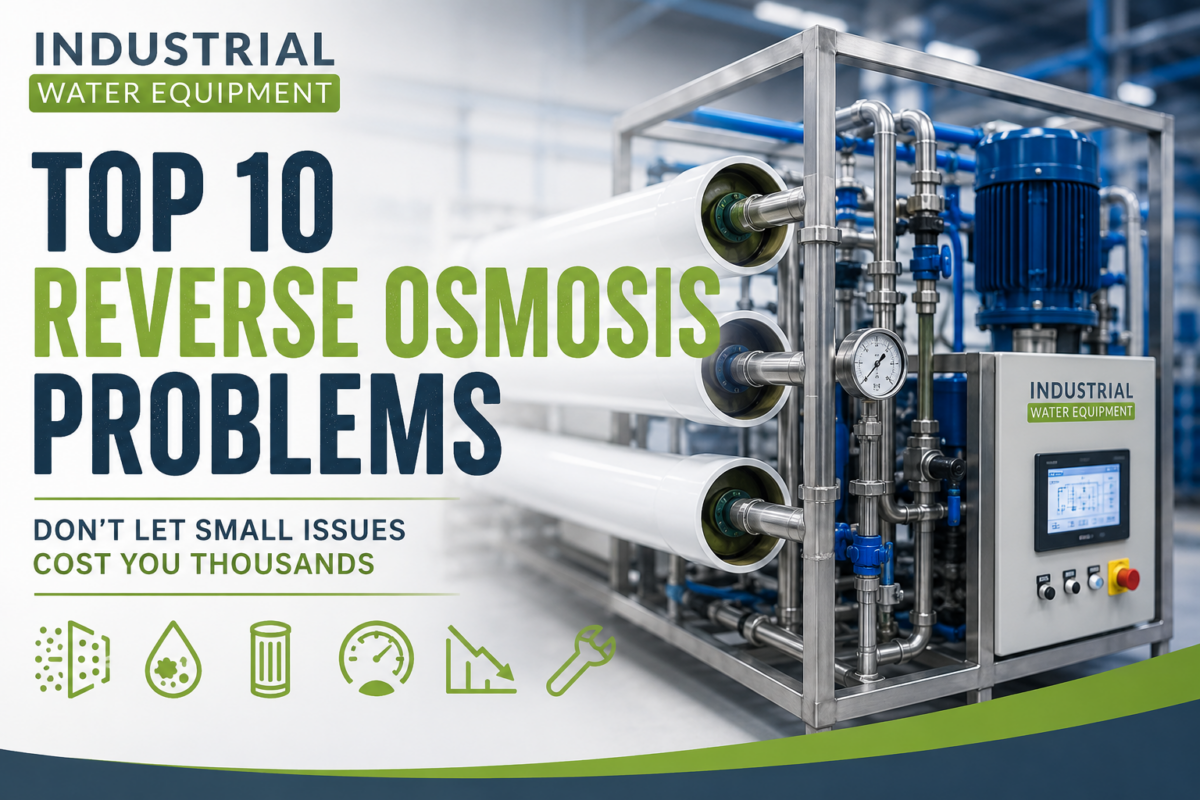
Here are ten common reverse osmosis problems that could be quietly costing your business thousands every year.
1. Membrane Fouling
Membrane fouling is one of the biggest causes of poor RO performance. Organic matter, suspended solids, bacteria and oils gradually build up on the membrane surface, restricting water flow.

What it costs
- Higher energy consumption
- Reduced production capacity
- More frequent membrane cleaning
- Premature membrane replacement
Prevention: Ensure effective pre-treatment and clean membranes before fouling becomes severe.
2. Scale Build-Up
Mineral deposits such as calcium carbonate and silica gradually coat membrane surfaces, reducing efficiency.
What it costs
- Lower water recovery
- Increased operating pressure
- Permanent membrane damage
- Expensive membrane replacement
Prevention: Correct recovery settings, antiscalant dosing and regular water analysis.
3. Poor Pre-Treatment
Skipping routine filter changes or operating with blocked cartridge filters forces contaminants directly onto the RO membranes.
Replacing a blocked filter costs very little.
Replacing a full membrane set can cost thousands.
What it costs
- Membrane damage
- Reduced production
- Increased maintenance
4. Incorrect Recovery Settings
Many businesses assume higher recovery automatically means greater efficiency.
In reality, pushing recovery beyond the design limits increases scaling, fouling and membrane stress.
What it costs
- More cleaning
- Reduced membrane life
- Increased downtime
5. Low Feed Pressure
RO systems rely on pressure to drive water through the membranes.
If feed pressure falls below design conditions, production drops significantly while energy efficiency suffers.
What it costs
- Lost production
- Higher running costs
- Poor process performance
6. Ignoring Early Warning Signs
A slight increase in conductivity or differential pressure might not seem important—but they’re often the first signs of developing problems.
Waiting until production stops usually results in a much larger repair bill.
What it costs
- Emergency call-outs
- Unexpected downtime
- Costly repairs
7. Poor Water Quality
If your RO is no longer producing the water quality it once did, damaged or exhausted membranes could be the cause.
Poor water quality can affect boilers, manufacturing processes and downstream equipment.
What it costs
- Product quality issues
- Equipment damage
- Customer complaints
- Production losses
8. Incorrect Chemical Cleaning
Not all membrane fouling is the same.
Using the wrong cleaning chemicals—or waiting too long before cleaning—can permanently reduce membrane performance.
What it costs
- Reduced membrane life
- More frequent replacements
- Higher operating costs
9. Lack of Routine Servicing
Many failures are entirely preventable.
Regular servicing identifies worn components, failing pumps, blocked filters and deteriorating membranes before they become expensive breakdowns.
 What it costs
 What it costs
- Emergency repairs
- Lost production
- Increased maintenance budgets
10. No Performance Monitoring
If you’re only checking whether the RO is producing water, you’re missing valuable information.
Monitoring key operating data helps identify problems long before they become failures.
Key parameters include:
- Feed pressure
- Differential pressure
- Recovery
- Rejection
- Conductivity
- Flow rate
- Temperature
What it costs
Without monitoring, small inefficiencies often go unnoticed—leading to higher energy bills, reduced membrane life and avoidable downtime.
Prevention Costs Less Than Repairs
Most reverse osmosis failures don’t happen overnight. They develop gradually, giving plenty of warning IF you know what to look for.
A well-maintained RO system will:
- Produce consistently high-quality water
- Reduce energy consumption
- Extend membrane life
- Minimise downtime
- Lower operating costs
- Protect your production process
At Industrial Water Equipment, we design, manufacture, service and optimise industrial reverse osmosis systems to help businesses maximise efficiency while avoiding unnecessary costs.
Need Help with Your RO System?
If your reverse osmosis plant isn’t performing as it should, our experienced engineers can help identify the cause before it becomes an expensive problem.
📞 01629 363311
✉ sales@industrialwaterequipment.co.uk
🌐 www.industrialwaterequipment.co.uk
